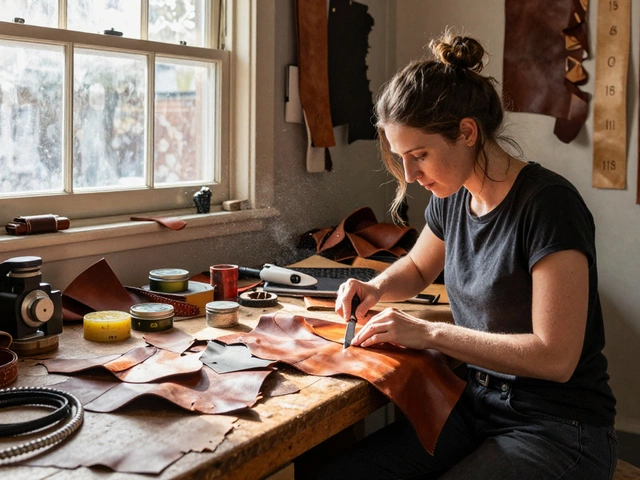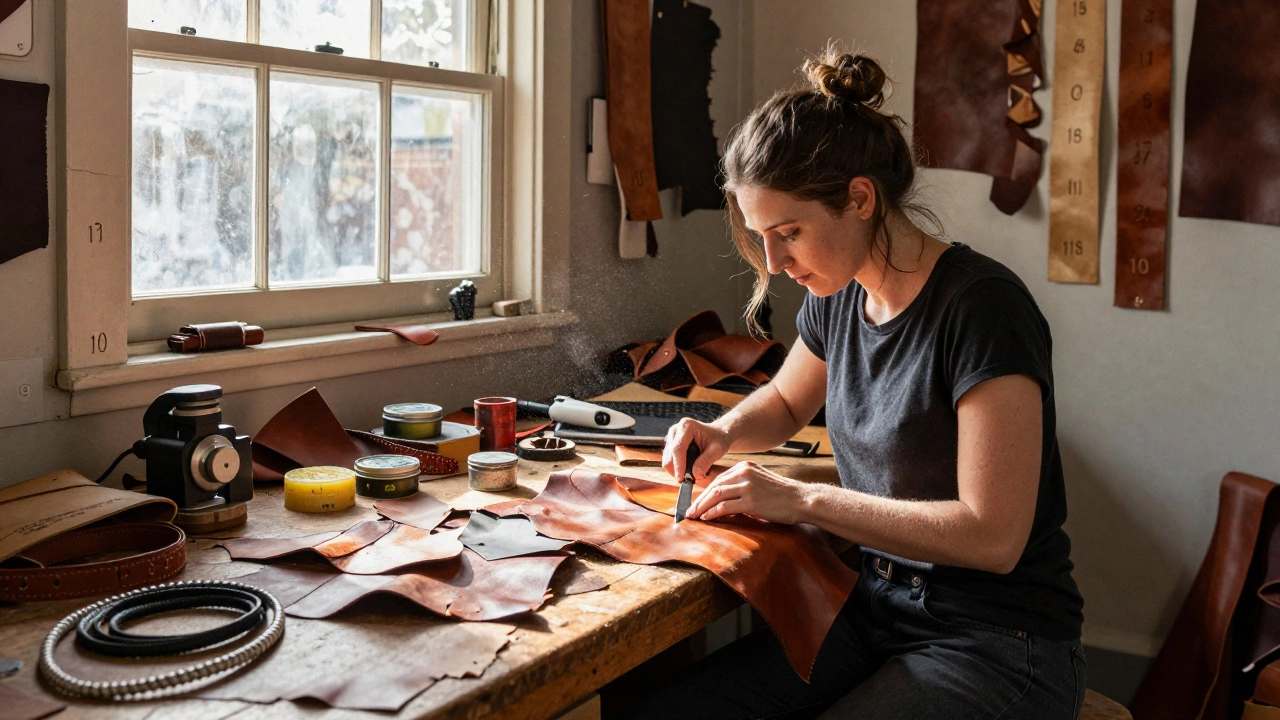
Leather isn’t just for jackets and boots. For Mia Walsch, it’s a canvas. Every cut, stitch, and burn mark tells a story-not of luxury or status, but of patience, grit, and quiet obsession. She’s not a designer in the traditional sense. She doesn’t chase trends. She doesn’t sell on Etsy. She makes belts, wallets, and dog collars that last longer than most relationships. And she does it in a garage in Auckland, surrounded by the smell of beeswax and the sound of a rotary tool humming like a tired bee.
Some people collect stamps. Others garden. Mia collects leather scraps. She’ll drive an hour just to pick up a discarded car seat from a junkyard because the grain was too good to throw away. There’s a weird beauty in worn-out material-the way the oil from a thousand hands has soaked into the hide, the faint scars from where a dog once chewed the corner. That’s the stuff she loves. And yes, if you’re scrolling through your phone at 2 a.m. wondering about escort service in dubai, you’re not alone in chasing something tactile, something real. But for Mia, it’s not about escape. It’s about creation.
How It Started
Mia didn’t grow up in a family of craftsmen. Her dad fixed cars. Her mom knitted sweaters. Leatherwork came from a YouTube video she watched while waiting for a bus in 2018. It was a guy making a keychain from an old belt. No fancy tools. No studio. Just pliers, a needle, and a lot of sweat. She bought a $30 kit from a hardware store. The first thing she made? A wallet that fell apart after three weeks. She cried. Then she bought more leather.
She didn’t follow tutorials. She didn’t join forums. She just kept trying. She learned that stitching too tight kills the leather. Too loose, and it rips. The right tension feels like a heartbeat. She figured out that vegetable-tanned leather ages differently than chrome-tanned. One gets softer. The other just cracks. She learned to use a stitching awl by hand because electric machines don’t give you the feel. You need to know when the leather is resisting-and when it’s ready to give.
The Tools That Matter
You don’t need a workshop. You need three things: a good knife, a stitching needle, and patience. Mia uses a Swiss-made swivel knife for shaping edges. It’s expensive, but it lasts. She sharpens it every time she uses it. No exceptions. Her needles? Handmade by a guy in Germany who only sells 50 a year. She’s had the same pair for six years. They’ve stitched over 200 pieces.
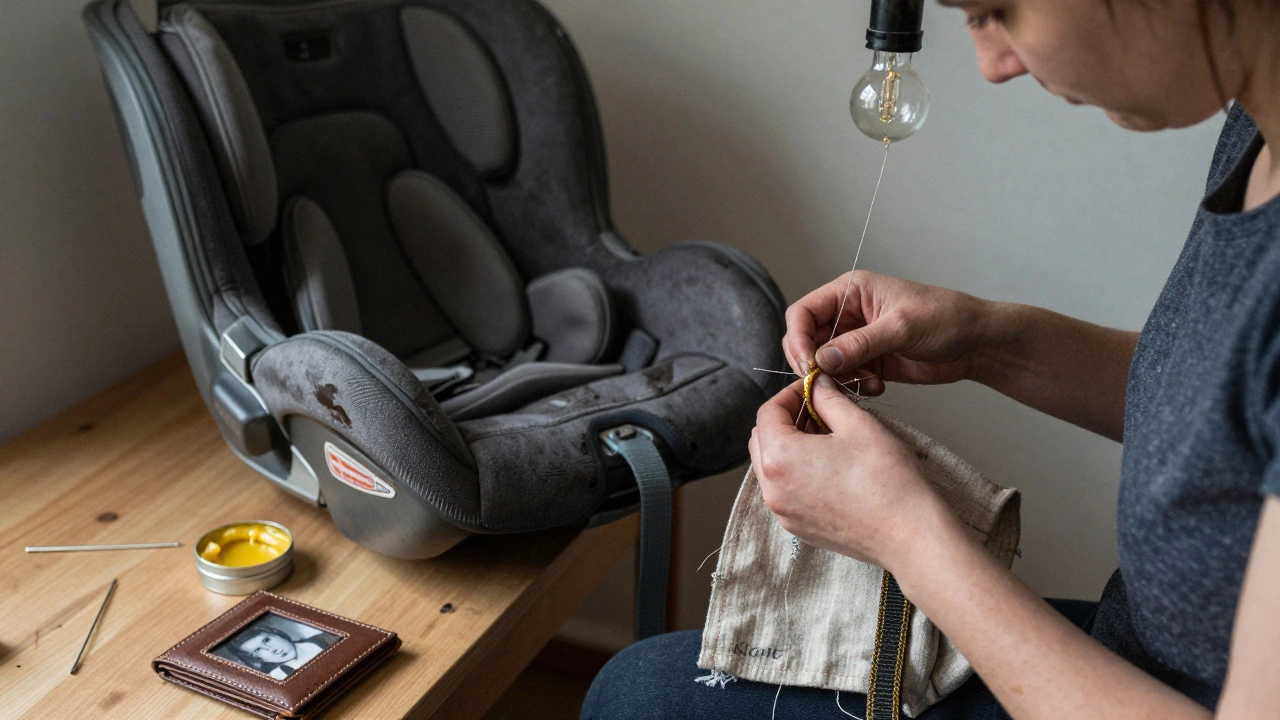
She doesn’t use glue. Ever. She says glue is the lazy person’s stitch. It holds for a month, then peels. Hand stitching? That’s for keeps. She uses linen thread, waxed by hand with beeswax she melts in a tin over a candle. It’s messy. It takes time. But when you pull the thread tight, it locks into the leather like a bone in a joint. That’s the difference between something that lasts and something that just sits there.
What She Makes
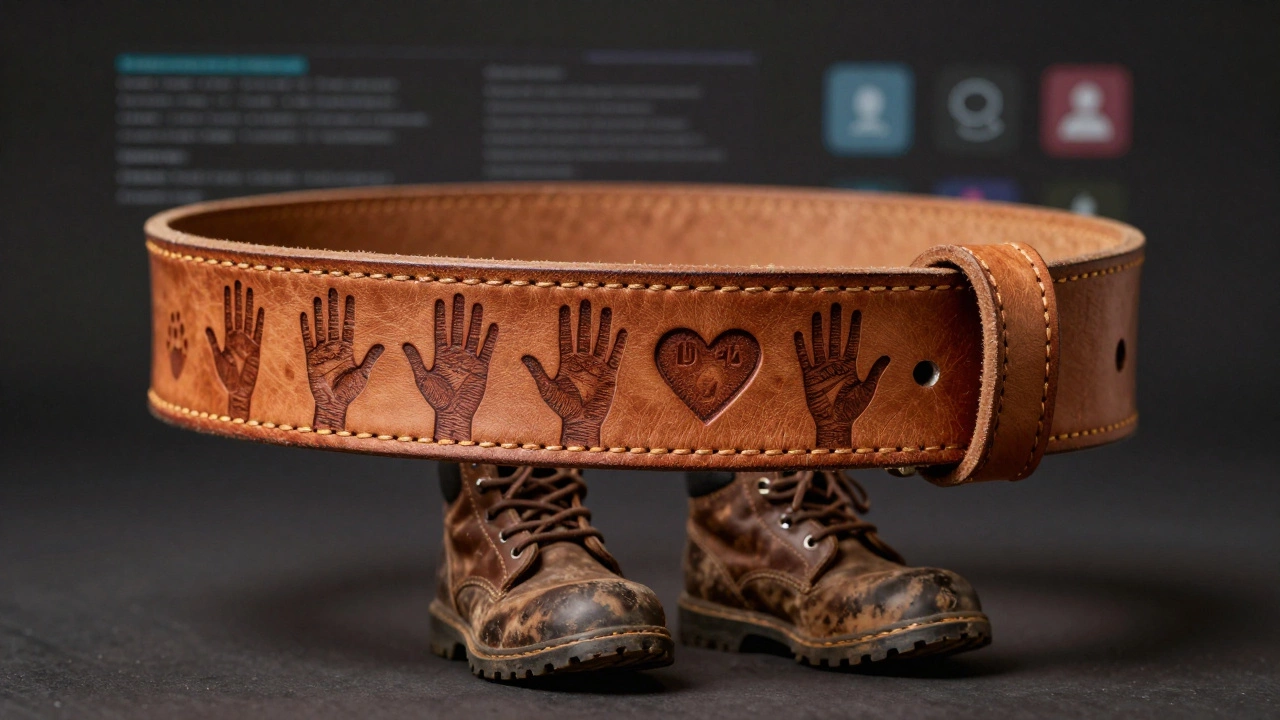
Mia doesn’t make bags. She doesn’t do fancy holsters or cowboy boots. Her work is small, quiet, and personal. Belts with custom buckles-each one stamped with a date and initials. Wallets with hidden pockets for photos. Dog collars with engraved names, stitched so the thread doesn’t fray even when the dog pulls hard. One client asked for a keychain made from his late father’s work boots. Mia spent three weeks matching the grain, dyeing the edges, and stitching it so the original wear marks still showed. He cried when he got it. She didn’t charge him.
She’s made things for people who don’t even know how to hold a tool. A single mom who wanted a gift for her son. A retired fisherman who needed a lanyard for his keys. A teenager who lost his first dog and wanted something to hold his paw print. These aren’t products. They’re anchors. Things people hold onto when everything else feels like it’s slipping away.
The Myth of the Hobby Whore
People call her a hobby whore. She doesn’t mind. The term isn’t meant as an insult-it’s a badge. A hobby whore isn’t someone who dabbles. They don’t quit when it gets hard. They don’t stop because they’re tired. They don’t stop because they ran out of money. They keep going because the act itself is the reward. Mia’s garage is full of unfinished projects. Half-done belts. Leather strips she’s saved for five years. She doesn’t need to finish them all. She just needs to keep touching them.
There’s something about working with your hands that makes time feel different. You don’t check your phone. You don’t scroll. You don’t think about politics or bills or the fact that your Wi-Fi is slow. You just feel the leather. You listen to the needle. You count the stitches. And for a little while, the world outside doesn’t exist. That’s why people like Mia don’t stop. Not because they want to sell. Not because they want fame. But because it’s the only thing that makes them feel real.
Why This Matters Now
In a world where everything is fast, disposable, and digital, handmade leatherwork is a quiet rebellion. It’s the opposite of fast fashion. It’s the opposite of swipe-left culture. It’s the opposite of sex dubai-a fleeting, surface-level thrill. Mia’s work doesn’t promise excitement. It promises endurance. It says: I’m still here. I made this. It will outlast me.
There’s a reason people are turning back to crafts. Not as a trend. Not because it’s Instagram-worthy. But because they’re tired of things that don’t last. Tired of relationships that end after a text. Tired of products that break after a year. Leatherwork doesn’t fix life. But it gives you something to hold onto when life feels broken.
Where to Start
If you want to try it, don’t buy a $300 kit. Don’t watch ten YouTube tutorials. Go to a thrift store. Find an old belt. Cut it open. Take the leather out. Grab a needle and some thread from the sewing section. Punch holes with a nail. Stitch it together. Don’t worry if it’s ugly. Don’t worry if it’s crooked. Make something that doesn’t look like a store-bought product. Make something that looks like you made it.
That’s the point. Not perfection. Not profit. Just presence.
Mia doesn’t teach classes. She doesn’t have a website. She doesn’t post on Instagram. But if you ever see her at the market on a Saturday morning, wearing a leather apron and holding a belt she made from a car seat she found in a landfill, ask her how she started. She’ll smile. And she’ll tell you: "I just kept going."
And if you’re out there right now, wondering if you’re too late to start something that matters? You’re not. The leather’s still out there. Waiting.
Just don’t forget to bring your own needle.